Title
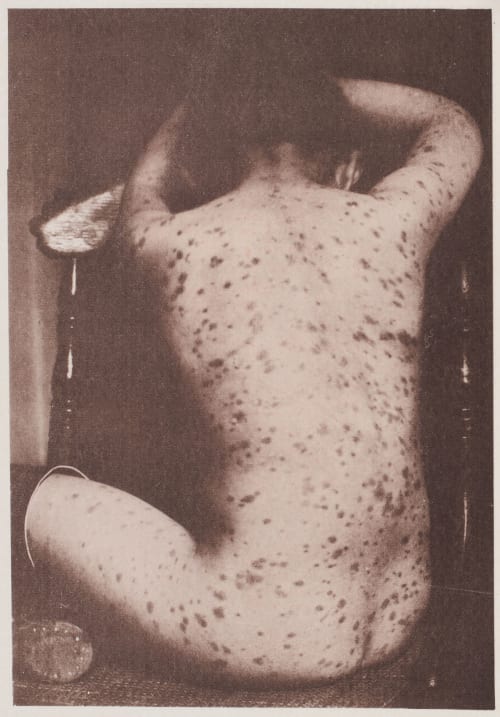
Urticaria PigmentosaArtist
Fox, George Henry (American, 1846-1937)Publication
Photographic Illustrations of Skin DiseasesDate
1886Process
Artotype (colored)Atelier
BierstadtImage Size
15.2 x 10.5 cmSheet Size
29.5 x 22 cm
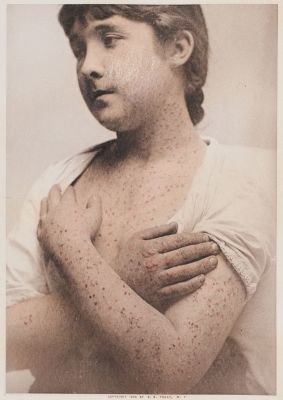
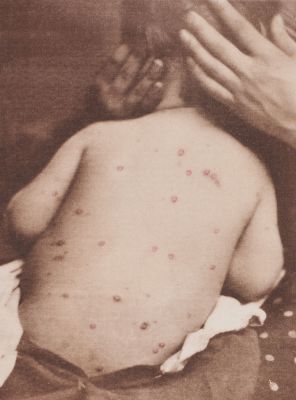
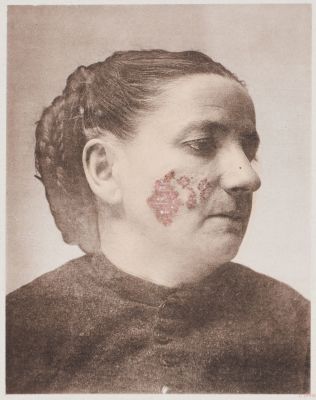
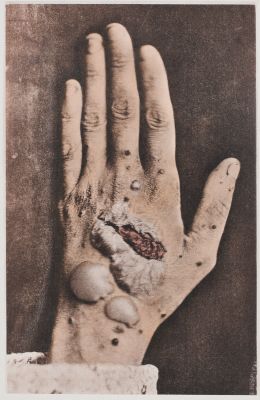
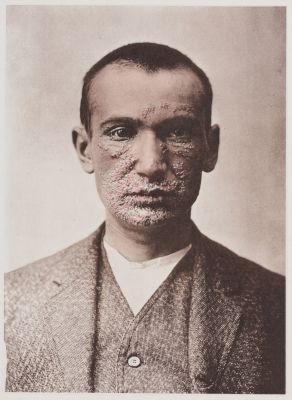
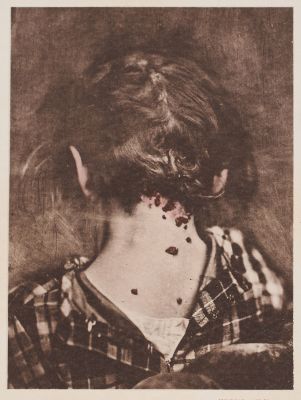
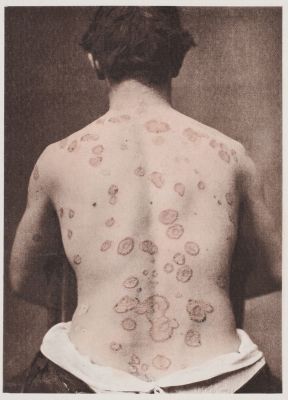
This publication represents a foundational achievement in the use of the artotype process, a proprietary form of collotype developed and licensed in the United States by Edward Bierstadt. The clinical portraits—largely credited to Oscar G. Mason and Fox himself—were photographed from life and subsequently transferred onto forty-eight artotype plates.
Dr. Fox compared the study of skin disease without “cases or colored plates” to the “study of osteology without bones, or the study of geography without maps.” He argued that photographs were essential for identifying the characteristic distribution and morphology of dermatological conditions. Yet Fox also recognized what he saw as a critical limitation of photography: the absence of color, which he described as an “essential element of diagnosis.” While acknowledging that colored lithographs could supply this missing element, he criticized them as prohibitively expensive and, in many cases, lacking fidelity to nature in both form and color.
To preserve the diagnostic value of the images, Dr. Joseph Gaertner hand-colored the plates using flesh tones and pigments to articulate the specific features of each condition. The 1886 edition contains eighty-five individual illustrations across these plates, each measuring approximately 30 × 24 centimeters. Together, they constitute a significant example of early industrial efforts to integrate high-fidelity photographic records directly into medical texts through stable, ink-based media (Fox, 5–10, 48–52).