Title
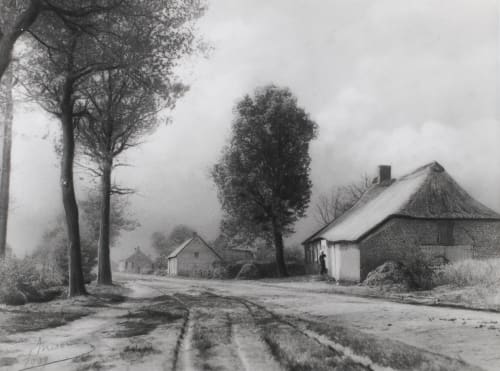
Paysage flamandArtist
Misonne, Leonard (Belgian, 1870-1943)Date
1939Process
Silver gelatinImage Size
19.4 x 26 cm
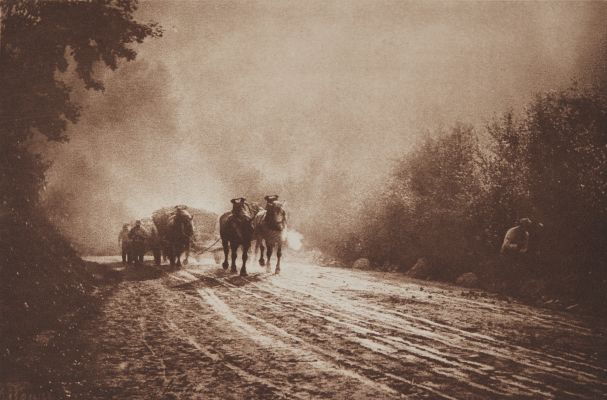
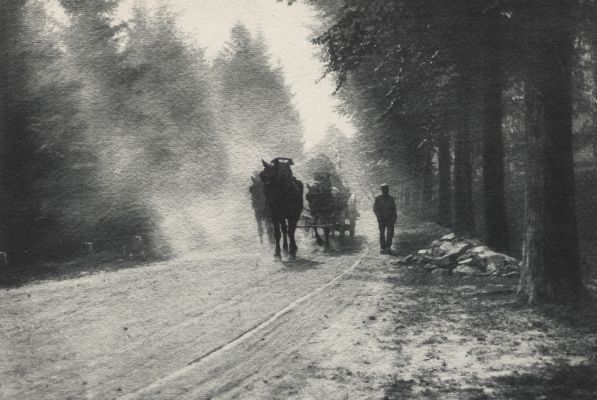
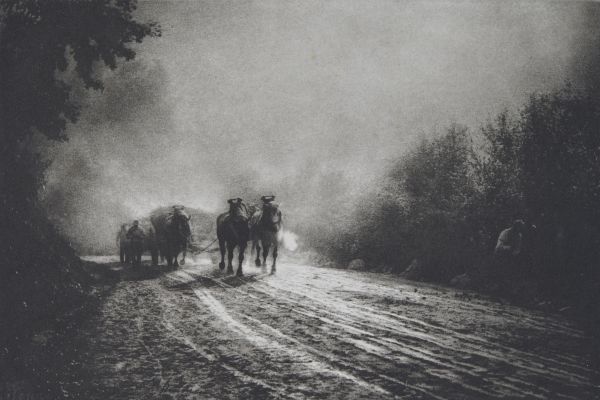
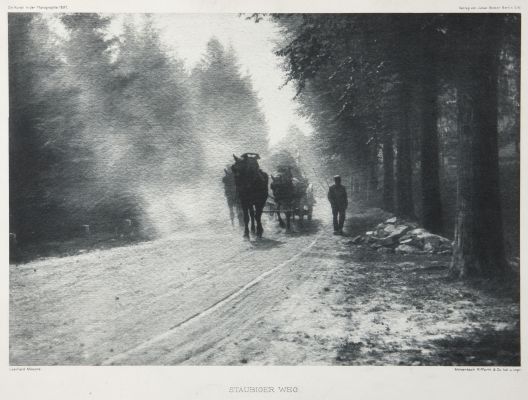
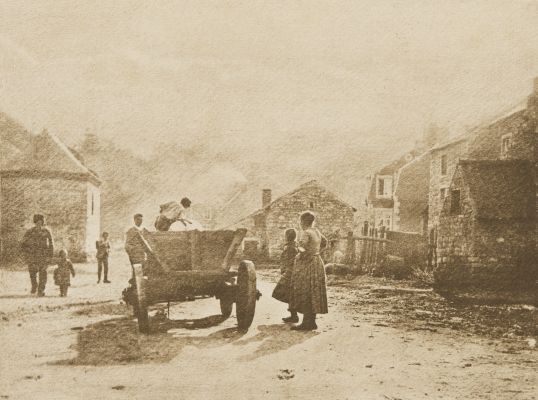
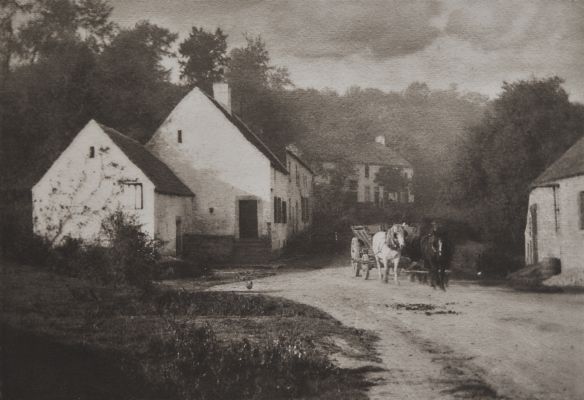
Léonard Misonne (1870–1943) was a Belgian pictorialist photographer best known for his landscapes and street scenes, in which light is the governing principle. He defined an approach built on atmosphere: early morning fog, storm-laden skies, and strong directional backlighting that produced a halo effect around figures in the landscape. He would invariably photograph in the early misty morning to maximize such effects, which were further enhanced by painterly printing techniques, most notably the bromoil process. To these he added his own invention, the mediobrome process, combining bromide and oil printing to achieve the soft, manipulated surface that became his signature. Widely exhibited in Europe and the United States during his lifetime, he earned the nickname "the Corot of photography" for a hazy, atmospheric sensibility deeply evocative of the French Barbizon painters.
While Misonne was widely celebrated, the Répertoire des Photographes de Belgique noted that his images, though possessed of genuine poetic qualities, could "slip into an anecdotal sentimentality" — a charge that reflected a broader unease with pictorialism’s tendency towards heavy handed manipulation. Other photographers working in the same period sought a more restrained path to similar ends. Alfred Stieglitz, James Craig Annan, and Alvin Langdon Coburn — all of whom published in Camera Work alongside Misonne — achieved atmospheric depth not through manual manipulation of the print surface but through the tonal properties of photogravure itself: its velvety ink density, its compression of highlight and shadow, and its capacity to render aerial haze and ambient light with a subtlety that bromoil brushwork rarely matched. Where Misonne worked on the print with his hands, these photographers allowed the medium rather than the artist’s intervention to carry the mood, something for which photogravure was particularly well suited.