Title
UntitledArtist
Ito, Eijiro (Japanese, b.b.1971)Date
2022Process
Photopolymer gravureAtelier
Eijiro ItoImage Size
27 x 20 cmSheet Size
50 x 32.5 cm
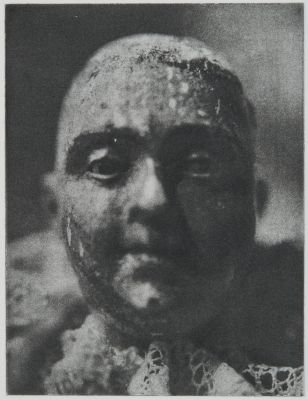
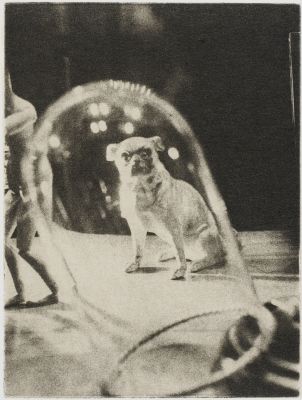
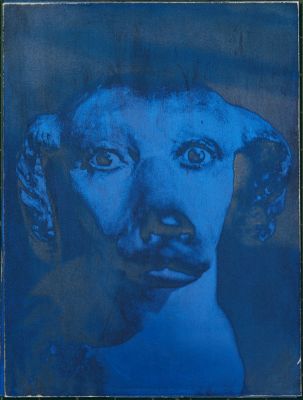
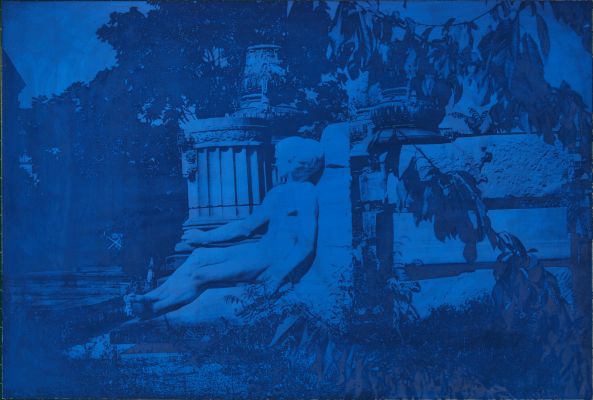
This collection has largely focused on prints made from traditional copper-based photogravure plates. Contemporary practitioners, however, have increasingly turned to photopolymer as an alternative substrate for producing light-based prints in ink. Photopolymer is a light-sensitive synthetic plate that replaces copper in photogravure and related intaglio processes. While the nomenclature surrounding prints made from photopolymer remains unsettled—are they still “photogravures”?—a confusion that has long accompanied photogravure and other photomechanical techniques, the visual syntax of photopolymer prints nonetheless asserts a distinct set of material and tonal characteristics.
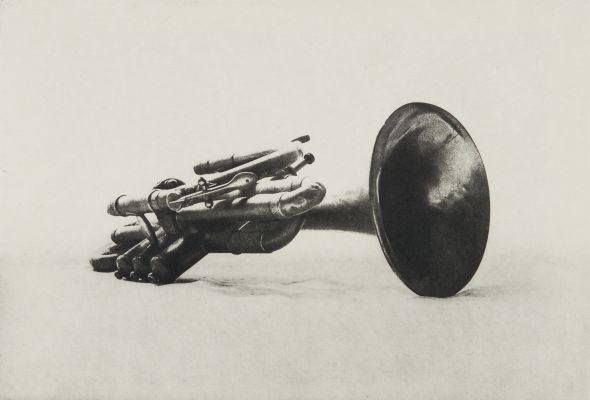
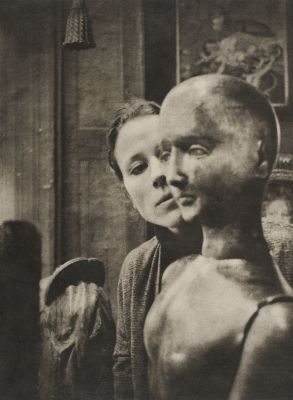
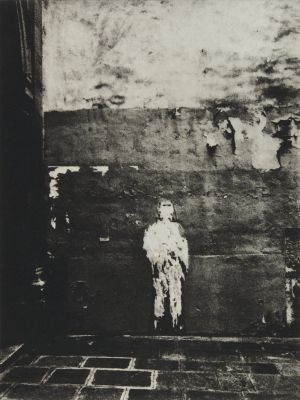
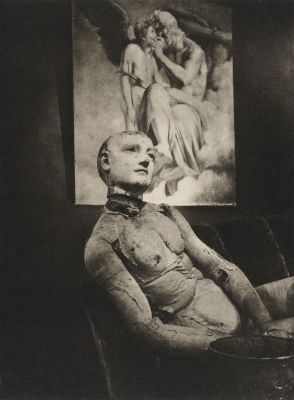
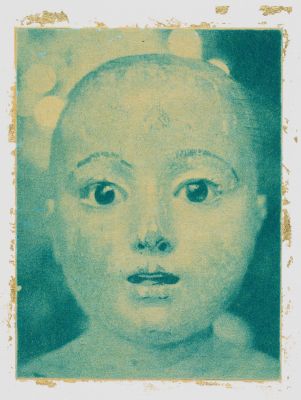
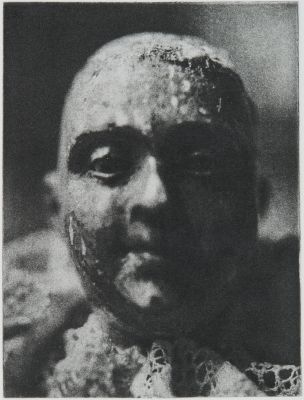
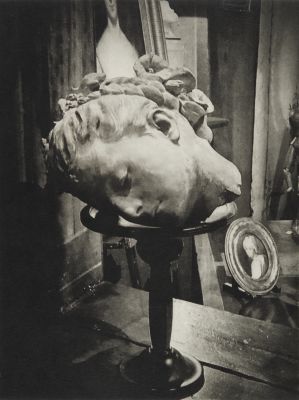
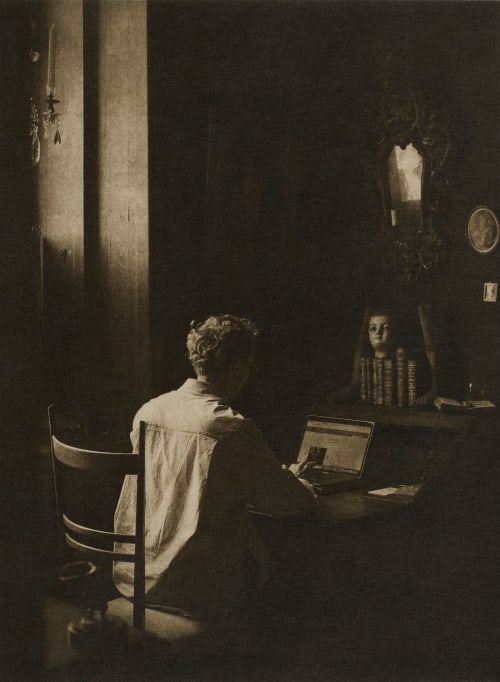
Born in Japan in 1971 and based in France since 1995, Eijiro Ito is a master printmaker whose work investigates the role of reproduction within the context of modern consumer culture. Operating as a flâneur—the observant urban wanderer—Ito navigates the streets of Paris, frequently drawn to the windows of antique galleries. It is within these spaces that he finds a compelling dichotomy between reality and fiction, where objects such as mannequins and statues made of wood, earth, and papier-mâché serve as silent witnesses to the passage of time.
A defining characteristic of Ito’s technical signature is his refusal to follow the common pursuit of "velvety" surfaces found in traditional photogravure. Instead, he looks back to a 19th-century lineage where Japanese washi paper and photographic plate-making formed an ideal pairing. Ito prints his plates on French BFK Rives paper, laminated with a delicate sheet of Japanese Gampi paper. This chine collé combination introduces a subtle surface reminiscent of raw silk, creating a refined tonal vocabulary that honors his Japanese heritage and the legacy of the Pictorialists.
Photopolymer film. Japanese Gampi pasted on BFK Rive Blanc paper. Edition of 10.